JAPANESE KNIVES – SOME NUGGETS OF INFORMATION
Craftsmanship characterized by precision and an eye for detail – Japanese knives are steeped in tradition and set themselves apart from the rest thanks to their balance and sharp blades. Lose yourself in the world of Japanese knife culture.
MANUFACTURE, PROPERTIES, ALLURE
For many, Japanese knives constitute the epitome of knife-making, and rightly so. They are extremely sharp, reliable and high in quality. Japanese knives have a rich history and there’s so much to learn about these Far Eastern blades. What’s the story behind the interesting patterns on the blades, for example? Are Japanese knives the sharpest in the world and what knife types are there? If you’re also fascinated by Japanese knives, read on to join us on a journey halfway across the world and let yourself get inspired with ZWILLING. We’ll tell you where exactly our products are made in Japan and reveal some of the biggest secrets.
JAPANESE KNIVES: THE STUFF OF LEGEND
True knife enthusiasts will already know this, but knives from Japan are made from special wood and steel. They are the epitome of a sharp, traditional knife of the highest quality, and rightly so. Samurai swords are the stuff of legends, and evoke ideas of both tradition and quality when we think about Japanese knives. In terms of the look and quality of the blade, Japanese knives were and still are, modelled on these weapons, seen by Japanese warriors as an extension of their arm.
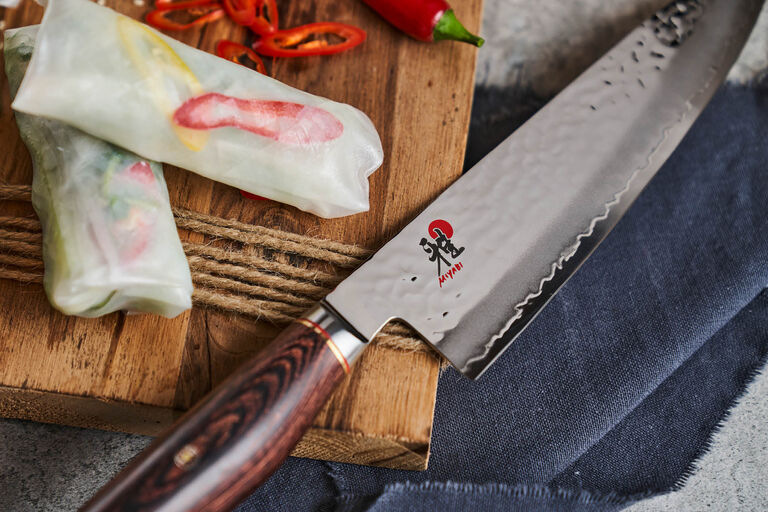
JAPANESE KNIVES BY MIYABI
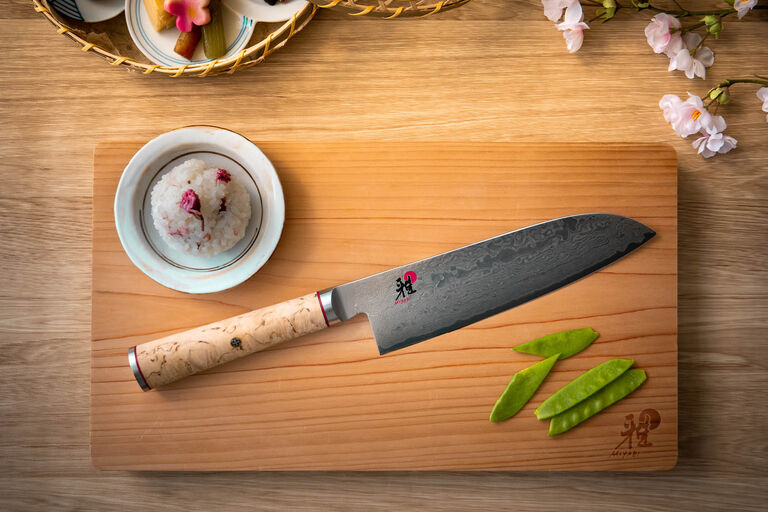
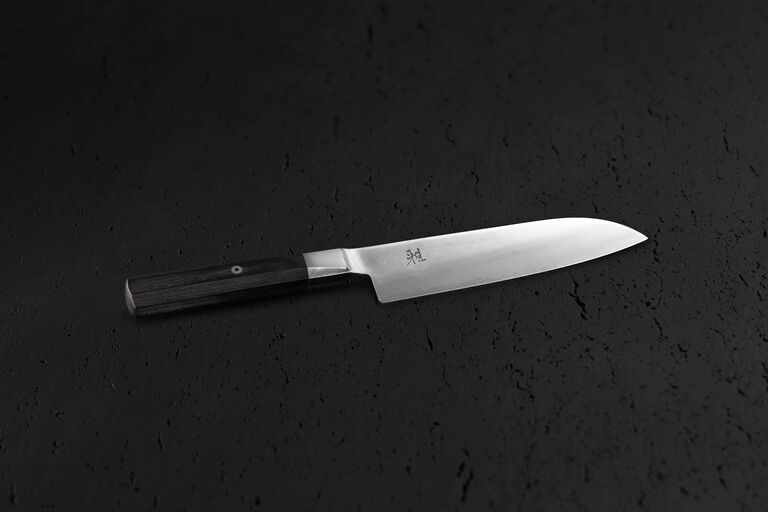
In addition to the entire array of Japanese knives that we have in the ZWILLING range (e.g. ZWILLING Diplôme), many products come from our other brand, MIYABI. Here at ZWILLING, you can find all kinds of Japanese knives, such as the Shotoh, Nakiri or classic Santoku, all under one roof, and whilst they can be used in similar ways to European knives, there are still differences.
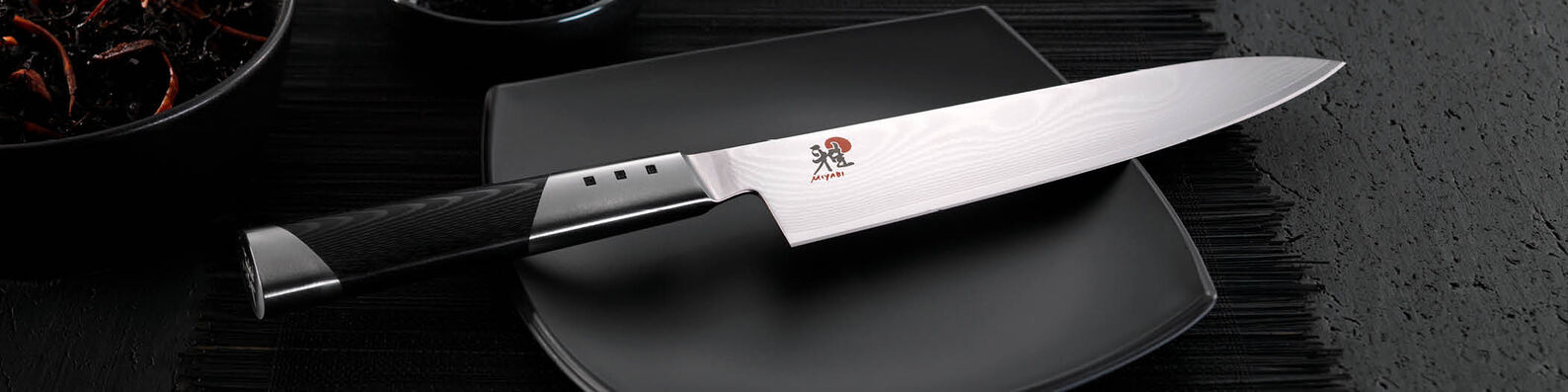
MIYABI – FROM THE HEARTLAND OF JAPANESE FORGING TO THE REST OF THE WORLD
The town of Seki has been the Japanese forging hub since the 14th century – those who make knives here truly understand their craft. Just like MIYABI, where German engineering meets Japanese craftsmanship. It takes 42 days and 100 individual steps to produce perfectly sharp, long-lasting knives with precise cutting edges, in a design which harks back to tradition-steeped Samurai swords. Escape into the world of Japanese knives!
Western knife culture
Chop in a rocking motion using the weight of the knife
Dishes prepared are larger – cut up on the plate
Most meals are cooked
Taste mainly created with heavy seasoning
Focus on the taste of the food, presentation is secondary
Meat cut off the bone
Dishwashers are used for cleaning
Drawer storage
Japanese knife culture
Chop in a hacking motion, lifting the knife then bringing it down
Food prepared is smaller – cut up in the kitchen
Cutting up raw ingredients = cookery
Taste created through quality ingredients and little seasoning
Taste and presentation are equally important
No meat on bone
Dishwashers are hardly ever used
Knife rack storage
What is Damascus steel?
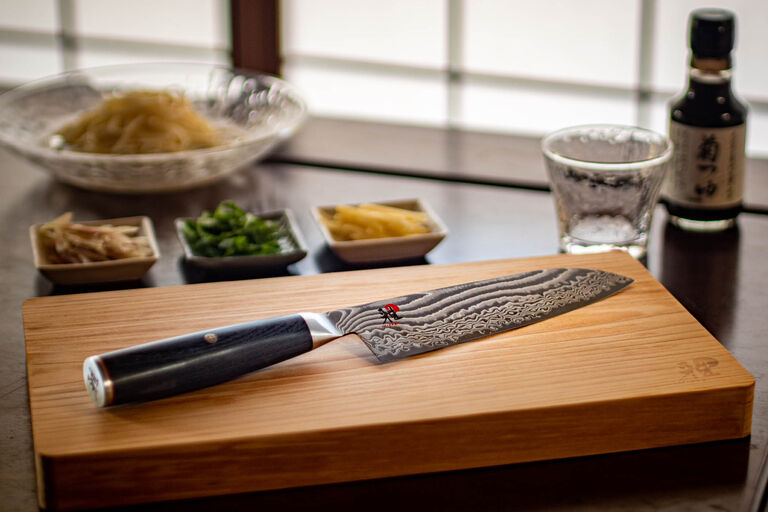
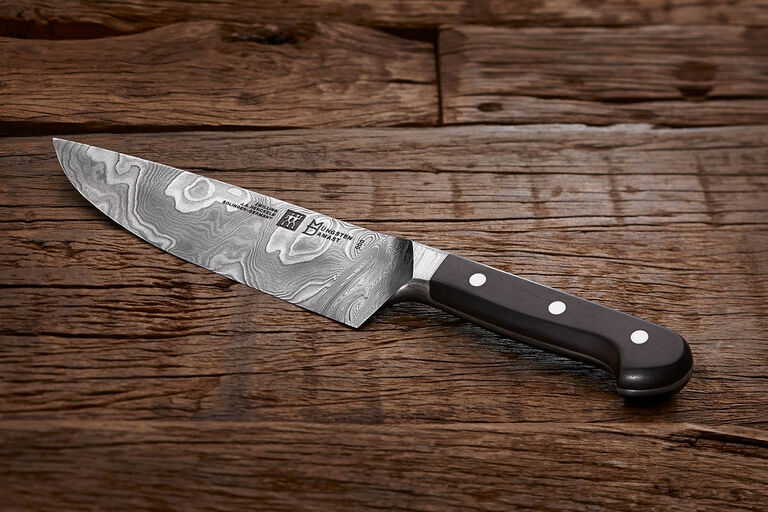
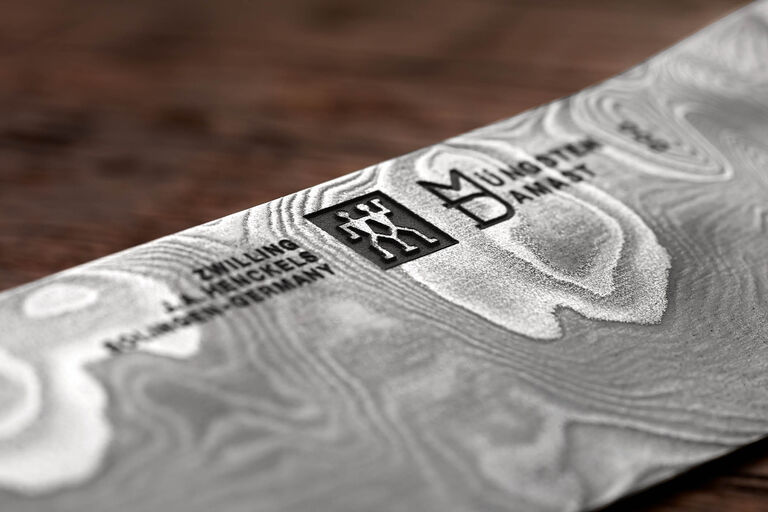
Damascus is a term you’ll hear plenty of when it comes to Japanese knives, but it is sometimes used incorrectly. Damascus is not a type of steel in itself. The term denotes the characteristic design seen on the blade, in addition to some other aspects, and many Damascus steel knives feature a special blade with a striking design, an individual pattern.
How is the Damascus pattern created?
In this context, it is important to understand that not all Japanese knives are automatically made from Damascus steel. There are some which do not feature this pattern on their blade. What is also interesting is that the steel blank which goes on to form the blade already features this special pattern. It is actually formed during the forging process and then uncovered using sandblasting.
THE SPECIAL PROCESS OF HONBAZUKE HONING
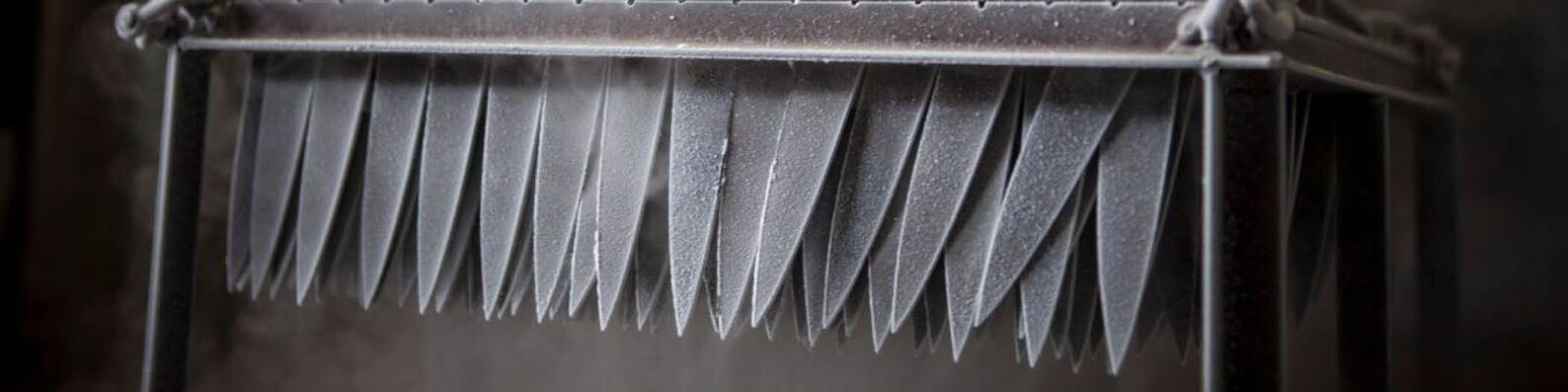
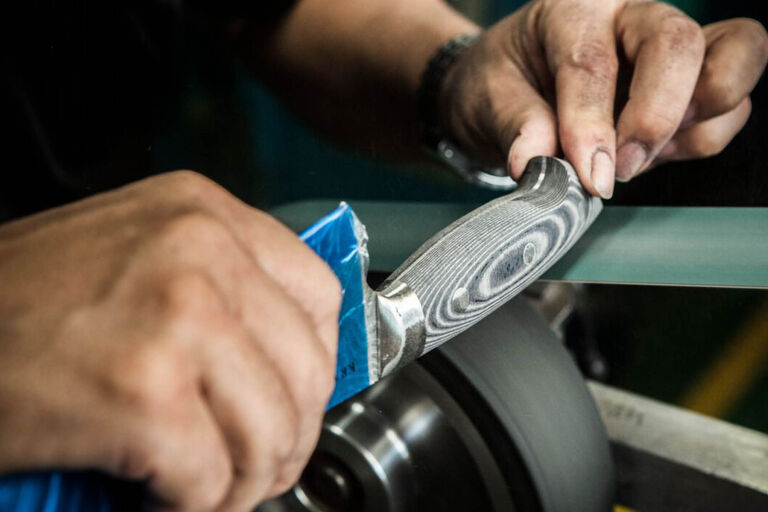
MIYABI knives are honed using the Honbazuke method, which literally means “true cutting edge”.
Honbazuke involves 3 steps:
1. The knife is initially ground on a coarse vertical rotating sharpening stone
2. The knife is then finely honed on a horizontal rotating sharpening stone
3. Finally, a vertical rotating leather stropping block is used to polish the grind/cutting edge
JAPANESE KNIVES AT ZWILLING – ALL ONE OF A KIND
Many of the Japanese knives produced by MIYABI are unique pieces thanks to the way they are ground and expertly formed. What’s more, the knives are the fruits of a long, complex production chain. They aren’t made in a day, rather, they’re the product of sophisticated craftsmanship, produced not by machines, but with their help.
QUALITY FROM TIP TO TOE
The quality of these top-class knives doesn’t end at the bolster. The handle is also a key part of a knife and our Japanese knives feature handles made from exquisite types of wood or Micarta, among other materials. Interesting fact: the handles of our Japanese knives contain a pin. This is the hallmark of our MIYABI knives and an ode to traditional Samurai culture. The pins are intended to call to mind the small talismans that Samurai warriors used to have attached to their swords.